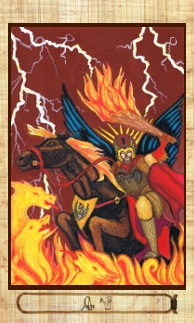
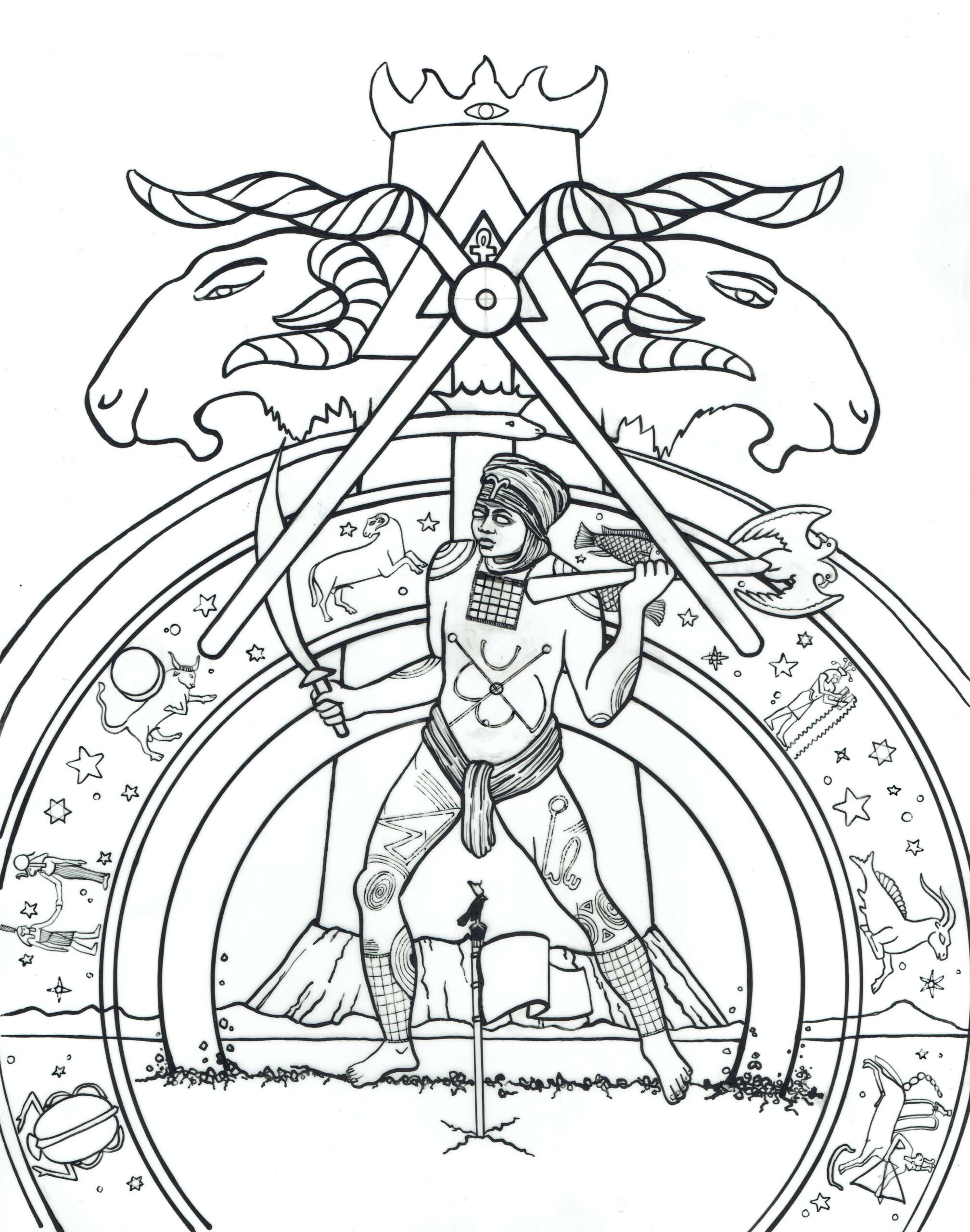
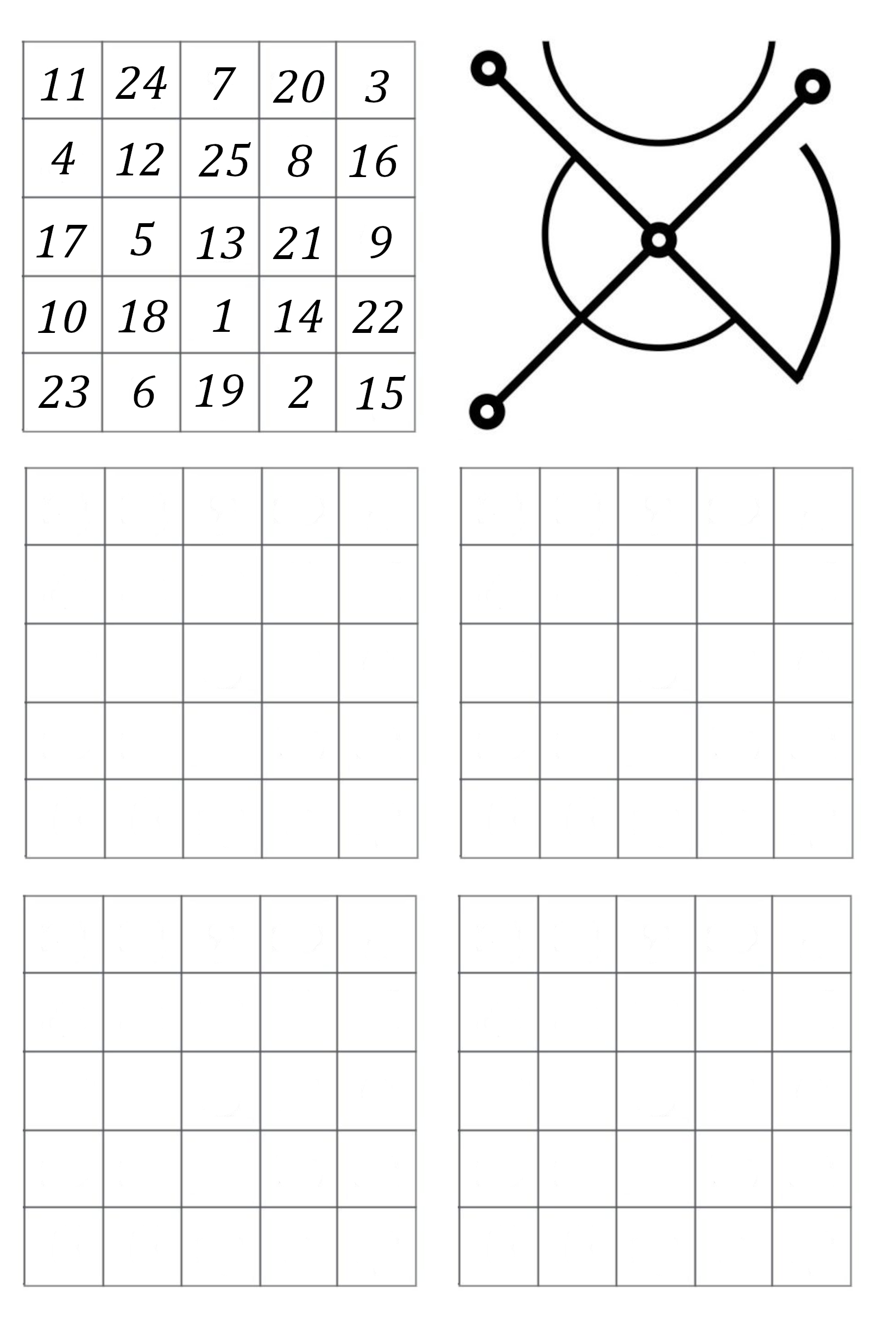
WARNING: It has come to my attention that there is a fraudster contacting people via email, impersonating me, claiming to be me, offering to help them with their crowd funding projects, etc. They offer to promote to my “community” and then pass you to someone else they claim works with me, who presumably then tries to get payment.
THIS IS NOT ME and has nothing to do with me, it is an impersonator who is seeking to defraud people. I have never had anyone manage any of my campaigns. I do not have a manager who runs a community on my behalf, nor have I ever had anyone manage anything. I do not randomly email people about help with crowd funding, or anything else.
If you get an email claiming to be from me, it almost certainly is not, unless you are indeed a friend or have opted into getting news here. I do not randomly contact people I don’t know and never will. If you are unsure if something is from me, you can contact the TarotCart store directly, or my email here, to check.
If you get an email from a GMail address, or other free email provider, claiming to be me, it is not me. I only use my own domain emails. But do not assume an email is legitimate, no matter what it looks like, as addresses can be also be spoofed, and they may use other services as well. Email me directly rather than reply to something.
Please do not reply to or engage with these people, and report the violation of Terms of Service and email abuse to GMail, or whatever address they use next. It is likely that impersonating someone with intent to defraud is against the terms of GMail and all other email providers. For GMail, the place to report abuse is here: https://support.google.com/mail/contact/abuse?hl=en&sjid=5614225570266864078-NA
If they contact you through Kickstarter, GoFundMe, or any other crowdfunding site, you should also report them there. If you can, help stop fraud by reporting it. It will help me, and all others they are trying to deceive.
Fiat justitia ruat caelum “Let Justice be done, though the heavens fall.”
Happy Equinox, and welcome back to Aries decan 1! We have come full circle, so I wanted to give you an update on the Decan Walk Workbook that was mentioned as forthcoming in the text of Scions of 777.
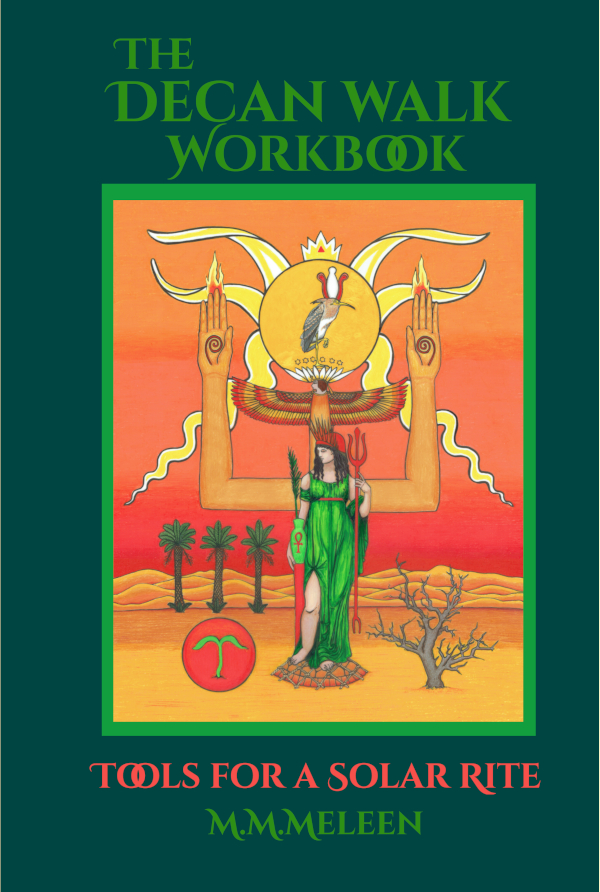
I’ve got the Decan Walk Workbook: Tools for a Solar Rite done and formatted and ready to go, set up with a print-on-demand publisher.
Using print-on-demand is an experiment, to see how it goes, before offering more of my work that way. In the past I’ve always paid a traditional printer to create a bunch of books for me, and shipped things myself. If this print-on-demand service works out well, there is an advantage for most international customers in that the shipping rates may be cheaper, because the print-on-demand company has both a USA and a UK location. Unfortunately they don’t have any other locations, but they ship worldwide and shipping from the UK to many places other than the US turns out to be cheaper.
Having them ship from the UK location also benefits UK customers, as I think that means it would be duty-free (?) for the UK. For other locations, duty charges would apply according to the rules of your country for shipments from the UK.
For US customers, shipping is still from within the US, from the US location, so the shipping rates are inexpensive, estimated between $5 and $13 depending on which carrier, speed, and method chosen. (I’m only using tracked methods, no matter where it ships.)
For UK customers, since there is a UK printer, the shipping options are even less, ranging from between USD $6 and $8, Economy or Priority, with some more expensive options as well for customized specific fast shipping.
Of course it varies for the rest of the world, but it is mostly cheaper for them to ship from the UK than if I shipped from here in the US.
Australia doesn’t have a printing location, but they ship there from the UK, rather than the US, so it is less expensive than it would be if I shipped them. Australia’s least expensive tracked method is about USD $22, which is a lot less than if I shipped from here.
The only place that doesn’t get much of a break is Canada, as they don’t have a Canada printing location and for some reason they will only ship there from the UK rather than their US location, which ends up costing around $31.
All this is to say, the book is ready to go, and I’ve already ordered myself a copy.
I am hoping to get it set up to order directly from them but from the TarotCart store during Aries decan 1. But there are a few snags with the printing company’s store integration app that I’m working out. Mercury stations direct on the Equinox, so maybe things will get sorted faster once he starts moving along again.
But there are options, if you want to get the workbook sooner.
But first, lets introduce the book.
A decan walk doesn’t have to be started in Aries 1. It can be at any time meaningful to you. After all, the Sun’s path through the zodiac is an unbroken circle, without beginning or end. The only criteria for a decan walk is that you consciously show up in some way for 36 consecutive decans.
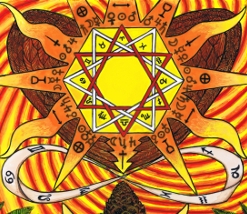
Actually, I’m thinking Aries 2, when the book is likely to arrive, would also be a good time to formally start, because the Decan Walk is a solar rite, and the Sun rules, and is exalted in, Aries decan 2. That’s why I put Aries 2 on the cover; it is one of the best places for the Sun to be, and still in Aries, the starting sign of the traditional zodiac. I just ordered my own test copy of the workbook, and expect to get it during Aries 2.
Here is the description of what is in the book:
The Decan Walk Workbook: Tools for a Solar Rite
The Decan Walk Workbook contains everything you need for participating in the year-long solar rite known as the “Decan Walk.”
A decan walk is a year-long solar ritual, done in concert with the star of our own universe, the immortal Sun. It is a process of ritualized observation of the Sun as seen through the lens of the thirty-six astrological decans of the zodiac. The decans are the faces of Heaven, each rife with angels, spirits, demons, deities and daimones, and a myriad of astrological and magical correspondences.
This workbook lists them all, and provides illustrations of the magical images of the decans, the planetary squares, seals, and sigils, together with planetary evocations, prayers and petitions. Here in one place are all of the tools that a practitioner needs for performing an annual decan walk and for decanic talismanic magical praxis. All of the decan tables and decan illustrations from Scions of 777 have been included here in a lay-flat, spiral bound workbook.
In this book you will find:
Ideas for the decan walk process
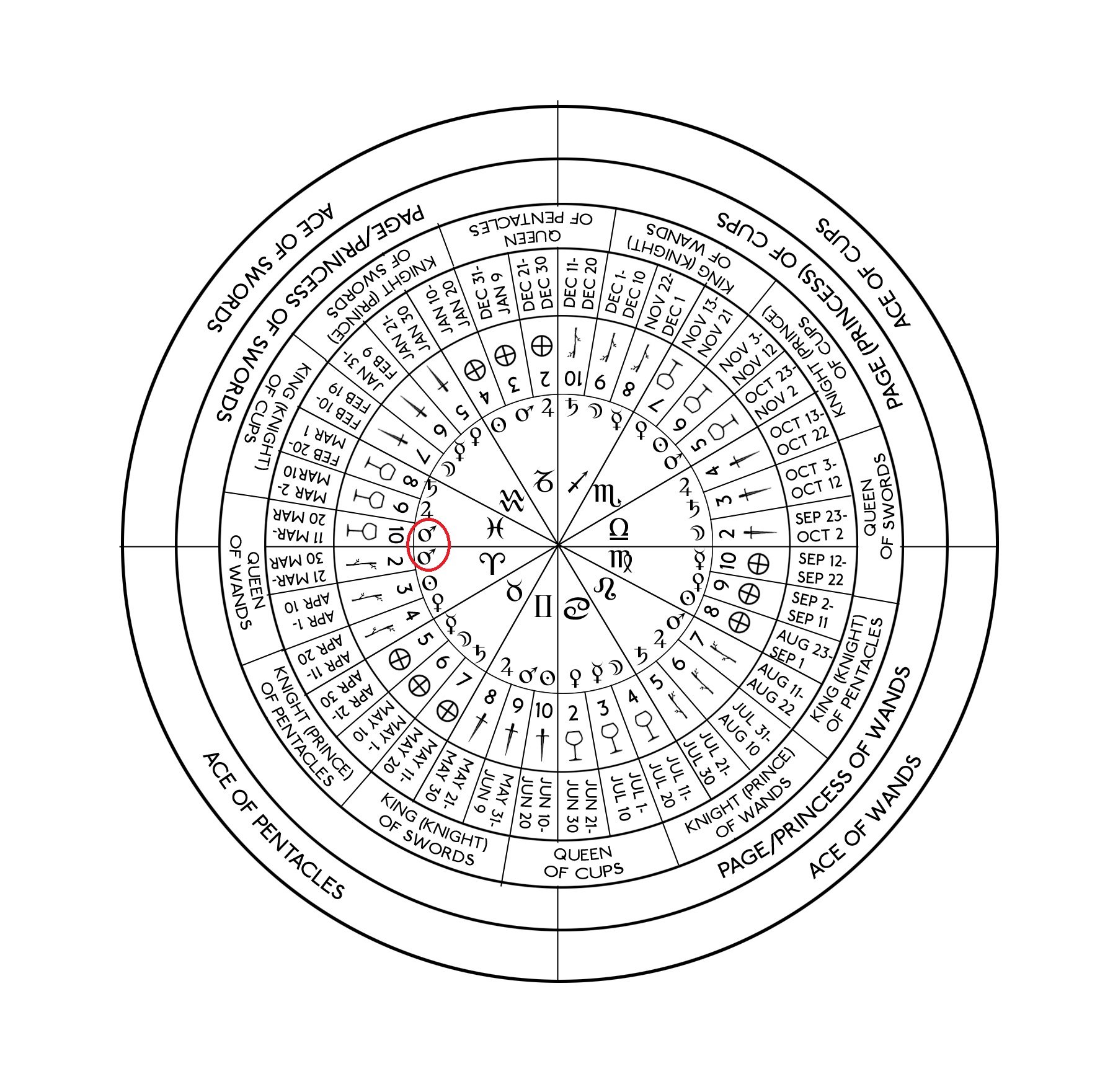
The exact dates and times for the Sun’s ingress into the decans for three years
A full page version of the line drawings of decan images from Telos Tarot of 777 for coloring or incorporating into your talismans
The table of the magical descriptions of the decans, from 777, Picatrix, Agrippa, Bruno, Varahamihira, Raphael, Ibn Ezra, Liber Hermetis, and the Sacred Book of Hermes to Asclepius
The table of decan correspondences: astrological, astronomical, tarot, color, stone, plant, suffumigation, and materia
The table of related decan deities, names, and spirits
Explanatory text for the tables
The Olympian spirits, planetary squares, spirits, and intelligences, seals, sigils, and templates for designing your own for each decan
Planetary evocations, prayers, and petitions from Picatrix, the Orphic hymns, and Hygromantia
Planetary epithets and magical weapons
A summary for each decan of the correspondences and themes of the decan
Suggested altar and offerings for each decan
Talismanic uses of each decan image
A section for recording your own notes and observations of the decan or results of your talismanic experiments
In one convenient place, everything decan related you need for a decan walk or decan-related talismanic and planetary magic, in a spiral-bound format that lays flat.
– Spiral bound
– 6×9 inches
– 298 pages
Price $25.00 USD
Of course, if you have Scions of 777, you have the tables that are in the workbook, and very small versions of the line art. The planetary squares, sigils, and hymns can be found on the internet, and any astrology program can be manipulated to calculate the exact solar decan ingress dates and times. But this book has the art full page, and everything organized by decan and planet, and all the tools and information you need is easy to access in a lay-flat notebook, with templates for your kamea-based sigils and sections for your notes.
If you want to order the book now, I can place the order for you and have the printer ship directly to you. They say it should go into production and be ready to ship in approximately 3-10 days, then there is transit time based on shipping method and location.
Here is how it works if you would like to order the Decan Walk Workbook now:
Email info(at) tarotcart.com with your shipping address.
If you want more than one book, the number of books.
I will use the print-on-demand service to figure out the shipping costs and speeds from the available tracked methods to your location, and let you know so you can choose which method you prefer.
I’ll send an invoice that you can pay from directly, using either a credit card or Paypal.
I’ll place the order, and when they ship it, I will send you the tracking.
I have to be clear that since I only just ordered my own personal copy and it is in production, I don’t know exactly how long it will take for the process. My order estimates that it will arrive early in Aries 2, but this is my first time using this company. I have read good reviews about the quality, so fingers crossed. And the good thing about a spiral binding is that we don’t have to worry about binding issues that can happen with perfect-bound style books with glued bindings.
Some resources for Aries 1:
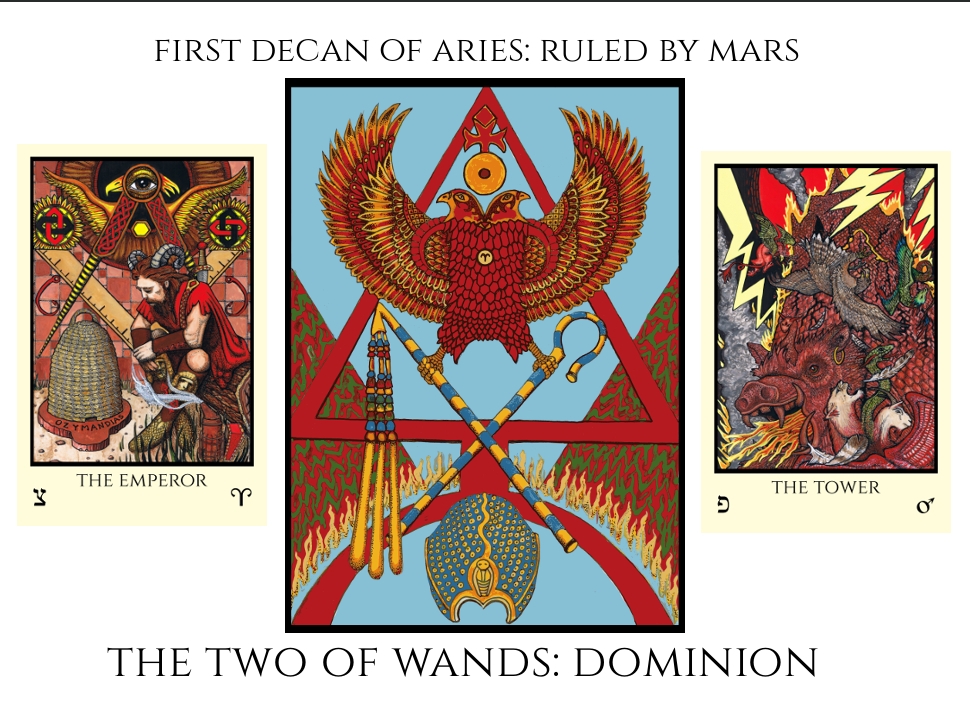
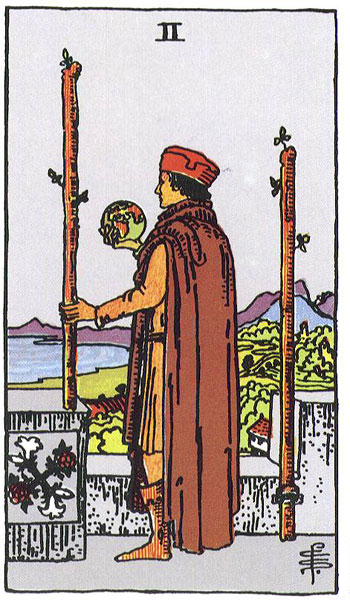
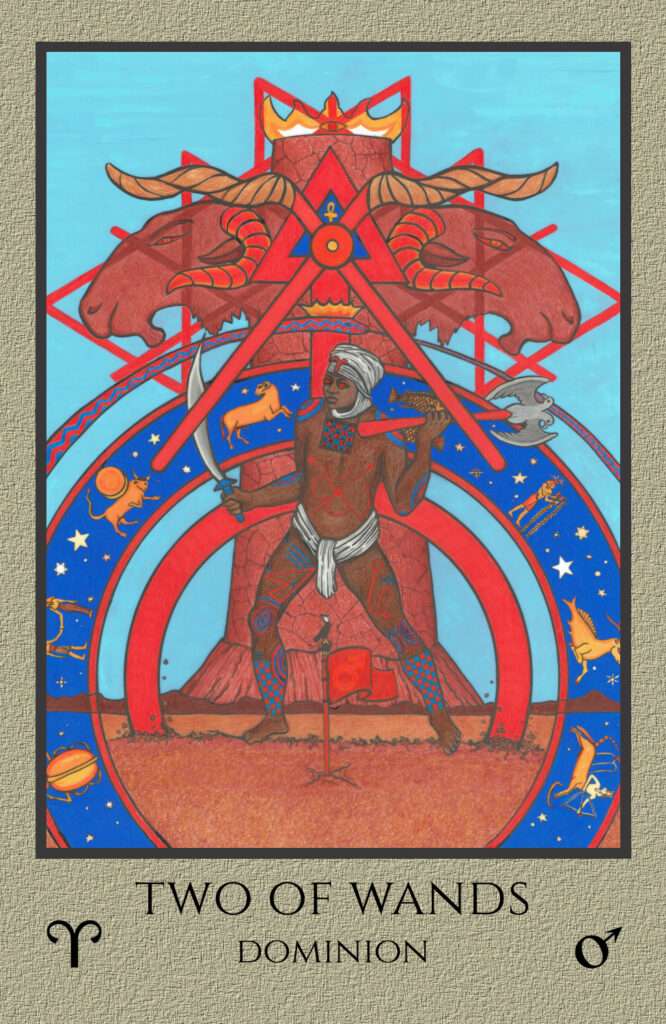
For those who want to start something NOW in Aries 1, here is a download for the Aries 1 image (2W), and a page with the Mars square, seal, and blank templates for creating your sigils. Also, my Aries 1 invocation.
You can also get Mars evocations from the Orphic hymns on the internet, and use the planetary epithets from Scions of 777 (Vol. 2) to write your own.
Numerical Keys: 5, 25 (5×5), 65 (sum of any row, column, or diagonal), 325 (sum of numbers 1 thru 25)
Intelligence of Mars: Graphiel [G-R-A-Ph-I-A-L]
3+200+1+80+10+1+30=325
Spirit of Mars: Barzabel [B-R-Tz-B-A-L]
Olympian spirit:Phaleg (or Phalec), “the War-Lord.”
If you already have Scions of 777, you have the tables for Aries 1 with all of the correspondences, decan images, and associated other deities. If you don’t have it, it is still available at TarotCart. The Sun entered Aries 1: March 20, 2026 10:46 AM and it enters Aries 2: March 30, 2026 12:59 PM (US Eastern Time).
If you would like to order the decan walk workbook now, please follow the instructions above. I do hope to get the book onto TarotCart at some point, but it isn’t yet certain.
Happy Equinox and Ostara, and enjoy another trip around the wheel!
This is the part II post for Pisces decan 3, the last decan of the zodiac, and thus is is the last post in our year-long decan walk series. If you have been following along decan by decan, congratulations! You have completed an annual solar rite of 365 days, a complete circle of the Sun through the zodiac.
We are approaching the end of Pisces now. The snow is melting and the garlic is just emerging from winter sleep.
On the last day of the Pisces 3 decan period, I’m going to plant some poppy seeds, gathered from poppies I planted from seed at the last degree of Pisces last year in Pisces’ last decan.
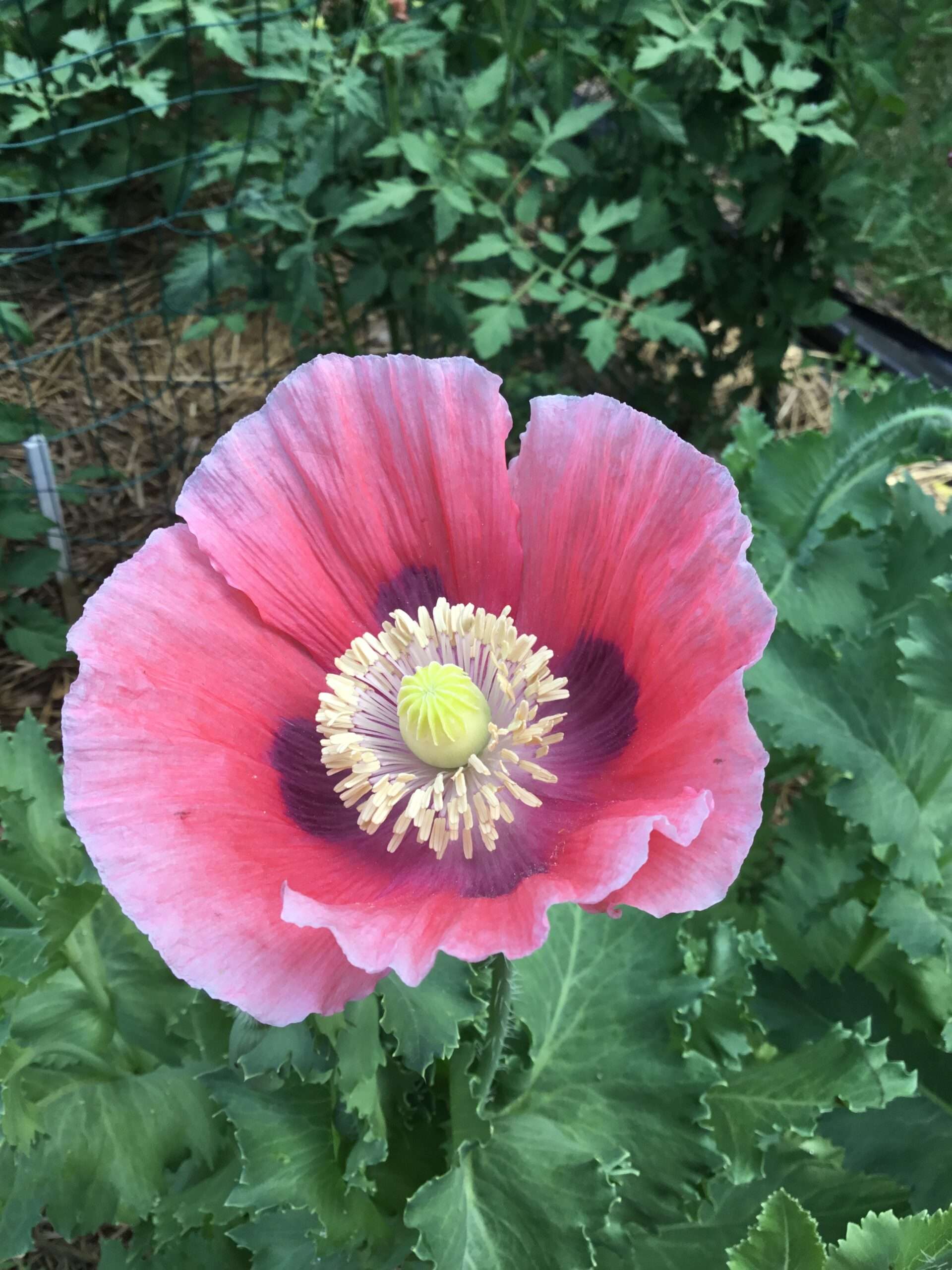
Here they are, from when they were flowering last summer during Cancer decan 3.
And then the poppy pods were harvested in Virgo decan 2.
Now here we are again; I’ll be planting the seeds from these on the last day of this zodiacal year.
In a few days, the entire cycle begins again, at the March Equinox and start of Aries 1. Or I should say, the entire series of cycles. For it has no beginning and no end – you can pick it up at any point and find a thread that will continue.
In Aries 2 I’ll be starting seedlings and performing another round of the “Threefold seed spell.” Last time I planted nasturtiums using that spell and they were so prolific we had more than we knew what to do with. In addition to eating them constantly, I dehydrated some leaves and powdered them – it will be sprinkled on the soil for fertilizing the new plants this time around.
And I made some nasturtium infused vinegar, with the flowers that were intentionally grown with that spell, that we are still enjoying now for its health giving life force.
In Taurus 3, a sign ruled by Venus and decan ruled by Saturn, I’m going to string the mala, from the Job’s tears I planted then in Taurus 3 and harvested in Libra 2 – another sign ruled by Venus and decan ruled by Saturn. Thus another thing will come full circle.
Everything repeats, not just agricultural motifs. Nothing changes, and yet everything does. While cycles repeat, each time it is experienced anew in ways we cannot know.
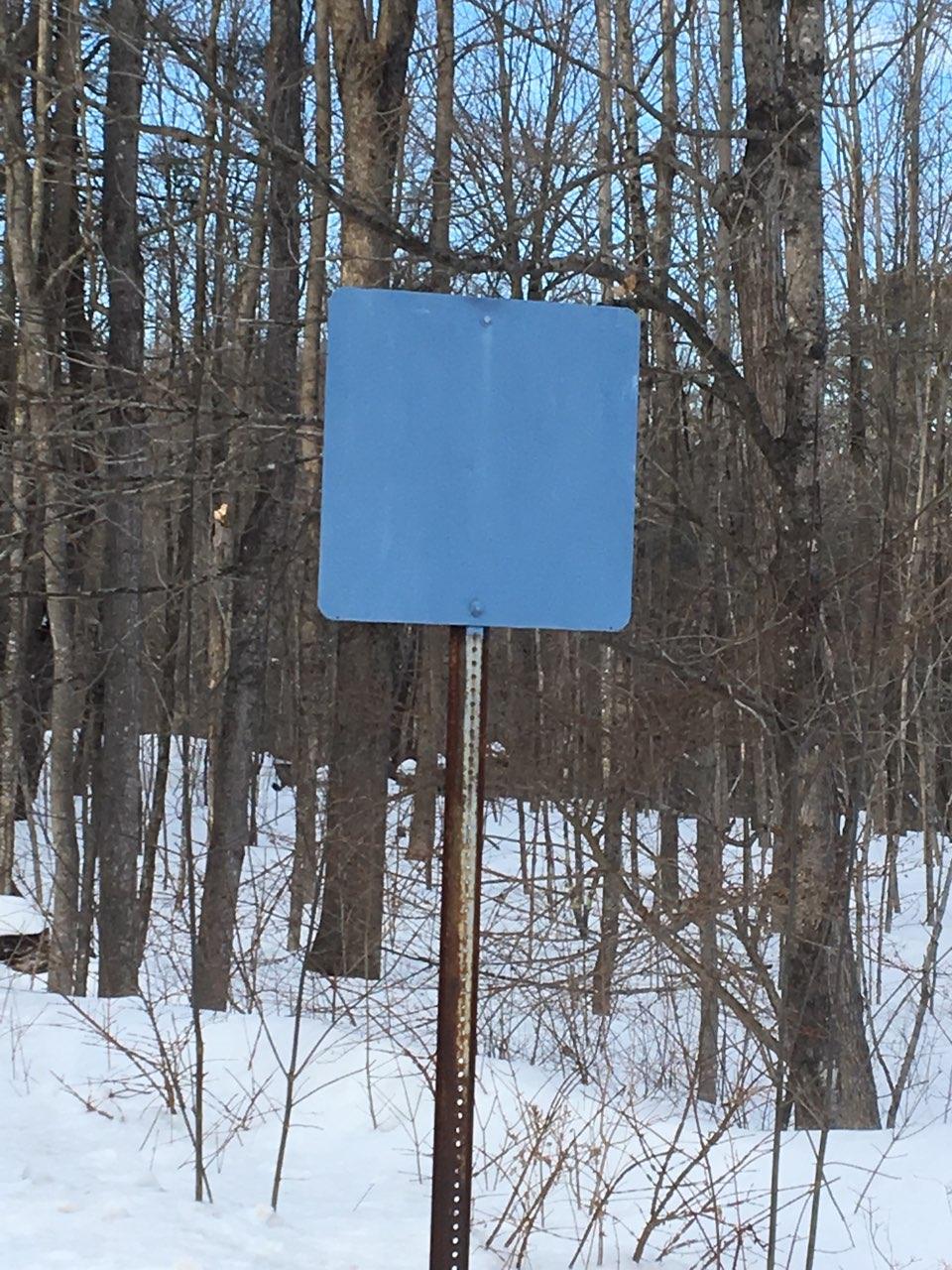
Sometimes you look for signposts ahead, and draw a blank. I asked for signs on a walk, and got these:
You can take this to mean the universe is withholding its guidance – or that the future direction is yours to write.
I do not know what the next “decan walk” has in store for me. It never ends you know – while you are alive, you are on a decan walk. But it is the act of consciously participating in it and observing it that makes it a solar rite.
I’m not going to be posting at the beginning AND end of every single decan again this time around, as I want to leave space for some new manifestations. Nature loves to fill a vacuum, and if I’ve filled up this time there won’t be room for fresh inspiration. Within the last few years I completed Telos Tarot (a 5 year mission), did the Kickstarter, then got it printed, published and mailed around the world. Then I embarked on these 72 decan walk posts, while simultaneously writing the 594 page Scions of 777 book, getting that printed, published, and mailed. It’s been a lot, along with the daily grind of work and homesteading.
Since the release of the big book I’ve been working on the Decan Walk Workbook, that I oh-so-foolishly mentioned in the guidebook and thus set myself up to have to complete it in only a few months time.
So after that is out, I guess you could say I am full Satiated. I’m ready for a fallow period to let the muse have the silence it needs in order to be heard again, to see the signs of what the next decan walk holds in store. But the Workbook is now finally done. I’d hoped to get it out in this decan, but it will be out in Aries season for a new start.
I’ve just finished it, and it is written, proofread to the best of my ability, and formatted into what I hope is a useful style.
The Decan Walk Workbook: Tools for a Solar Rite will be released during the upcoming Aries 1 decan, in time for another trip around the wheel. It has all the tools you need for a decan walk and sojourn into astrological talismanic magic. And it will be in a spiral-bound, lay-flat format.
Something new to note: I’m planning on (hopefully) using a Print-On-Demand service that has both a US and a European location. This means shipping will be cheaper for international customers. It will be available to order on TarotCart, BUT since it is print on demand, it would ship separately from anything else ordered there.
More to follow about the workbook, what is in it, and how to get it, will follow in Aries 1, so if this is of interest stay-tuned.
The entire past series of Decan Walk posts will remain here, so if you wish to refer to them as you begin, or begin again, you can start here in Aries 1 and follow along the entire series of posts, with Part I being the correspondences and Part II being more personal updates.
I wish you all good things during this next trip of the Sun around the wheel.Thank you for being here, and for all who participated in any way. I’ve enjoyed all the comments and encouragement along the way.
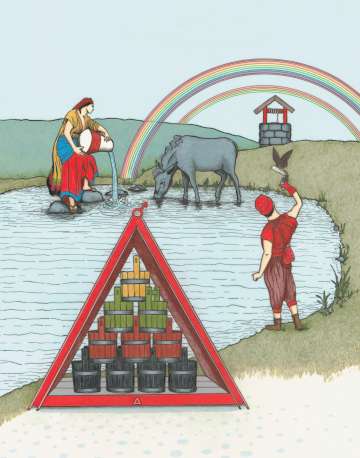
Cadent Decan of Pisces: A man of grave and thoughtful face, with a bird in his hand, before him a woman and an ass.
Pisces, ruled by Jupiter (classical) and Neptune (modern)
Decan ruled by Mars
Triplicity ruler Mars
This is the last decan in the traditional zodiac, and thus the last decan in our “decan walk” series. There will be one more post wrapping up after this. After that – something new begins with the Vernal Equinox. The decan and triplicity ruler Mars gives a heads up of the approaching fire – and more Mars – at the Equinox with Aries decan 1.
It is the end of the line for the water suit as well, as a Ten.
“While it is the maximum expression of water elementally, it is the place in the decanic sequence of Chaldean rulers were there are two in a row ruled by Mars. This is a double-shot of Mars, as a spark of fiery energy to reignite the sequence.
The Ibn Ezra and Varahamihira images mention the possibility of approaching fire. The upright triangle [in the Telos image above] is a symbol of Fire, for the fiery nature of Mars, ruler of this decan and the next. Upright triangle structures containing wooden pails were used as traditional Japanese fire-bucket stands in the Edo period. As fetching water was time-consuming and difficult in a fire emergency, these were filled and placed outside of valued buildings like temples, for quick access in the event of fire. It is colored scarlet for Mars, and topped with a Mars glyph. The ten buckets stand in for the ten cups, colored in the color(s) for Malkuth of Briah: Citrine, Olive, Russet, and Black. In Malkuth, home of the Tens, these represent the primary colors of the four elements present in the Earth realm, each muddied as commingled with each other slightly.
Yet as is appropriate for the ultimate Cups card, water abounds in the image: ten buckets filled and waiting, a woman pouring more water into a pond, a well atop the hillside, and water in the sky in the form of the rainbows. The well is a symbol of life, sublime aspirations, of life itself as a pilgrimage, of the soul and mystic contemplative wisdom (Pisces).
Like the Ten of Cups card in the Rider Waite Smith card, there is a rainbow in the sky – in this case, a double. The rainbow is a manifestation that combines fire (light) and water (rain). It tends to symbolize the descent of the energy of heaven upon earth. That is likely how Waite as a Christian mystic viewed it, for the idea of “Perfected Success.” Yet the rainbow also has connotations of endings. This is after all, considered the end of the zodiac. They signify impermanence as they are fleeting by nature.
The double rainbow also has qualities of the “dream within a dream.” Crowley has renamed the card Satiety, for what has been perfected will eventually be disrupted. He says of Pisces that “In all these watery cards, there is a certain element of illusion; they begin by Love [Two of Cups], and love is the greatest and most deadly of the illusions. The sign of Pisces is the refinement, the fading away of this instinct, which, begun with dreadful hunger and carried on with passion, has now become “a dream within a dream.”” While he went on this tangent in the section on the four Nines, it seems especially applicable to the Ten of Cups.”
“36 Airs of the Zodiac” fragment; Kosmas
Elpis
Ptolemaic Egyptian deity (Kircher; 777)
Phallophorus
For deities we have Elpis, the daimon of hope and mixed blessings, a concept connected with the story of Pandora’s Box wherein all manner of evil was released from the box before she slammed it shut on hope. From 777 we have the Ptolemaic deity Phallophorus, meaning “carrying a phallus.” The Phallophoria was an Ancient Greek phallic procession in which massive erections were paraded about in a Dionysian ecstatic celebration.
Each of these deities in their own way expresses the energies of the Pisces 3 decan in which perfection is seemingly achieved but is due for disruption. Elpis retains hope in the box – yet is that a blessing or a curse. Was hope retained as a blessing, or withheld from mankind as a curse? Was hope itself a blessing, or one of the evils? Likewise, Phallophorus is associated with Dionysus, a god of wine, ecstasy, and ritual madness, and the phallus is the ultimate Mars or Tower symbol, this is a perfectly fitting expression for the Pisces/Mars combination. The image given by Gundel for Phallophorus is cognate with Satiety: “A man who leads a goat. He leads an epicurean life.”
I’ll be back near the end of the decan, with a final wrapping up of this series.
This is just a brief Part II update with observations on the decan, now that it is almost over.
I wouldn’t say this decan has been over-brimming with Happiness. But sometimes, happiness is, or should be realized when, there is a lack of unhappiness. If you have your health, and your loved ones’ are healthy and not in crisis or extreme pain or difficulty, if you have your basic needs met, and a lack of something stressful happening – well then, you are blessed with good fortune from Jupiter, ruler of both the sign and the decan. Realize that and happiness is quite accessible.
Because of course, even with Jupiter’s blessings things can change. One minute you are on top of the wheel, another, maybe trying to climb it or falling down.
It is these little things that make all the difference in the world. Maybe nothing extraordinary is going on. But nothing extraordinary needs to be going on. Today is the first beautiful warm sunny clear-sky day in a long time, after an absolutely brutally long-feeling winter here in New England. That alone is enough to raise my spirits. Look up at the sky on such days!
That’s all for now. I have to cut this short to get the post for the next decan started for completion tomorrow. And, I’m working on getting the Decan Walk Workbook, as promised to you all in the pages of Scions of 777, ready before the vernal equinox. I’d hoped to have it done in this decan, but to every thing there is a season, and a time to every purpose under heaven, as the song goes.
The penultimate decan of our decan walk, the middle decan of Pisces which is next-to-last of the zodiac. Here a sort of perfection is reached, called Happiness. But what is true happiness all about?
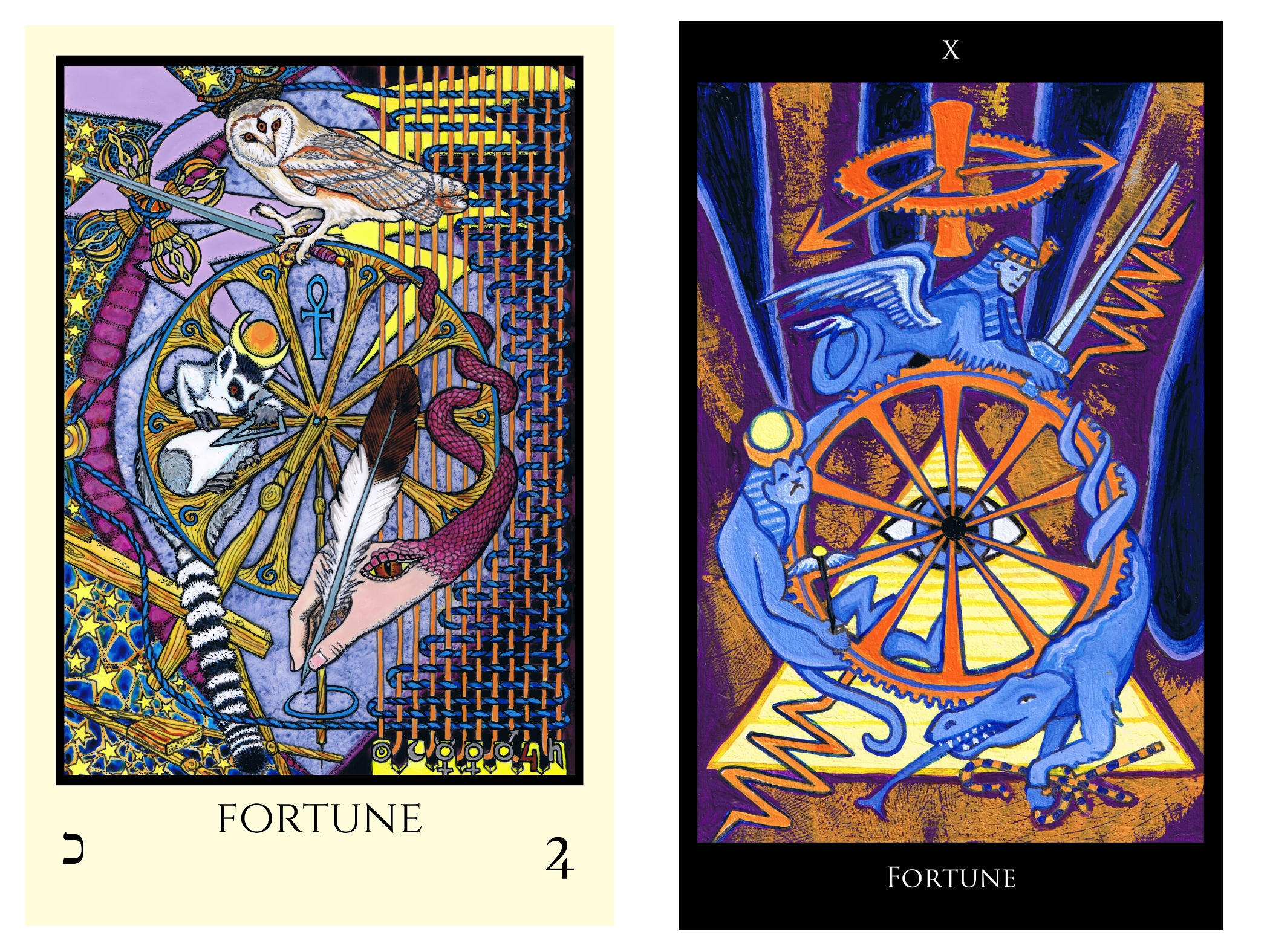
From left to right: RWS shows a rather self-satisfied burgher. Thoth shows amethyst cups being filled with golden liquid light from gold lotus flowers. Tabula Mundi shows the creatures from the Fortune card (Jupiter) frolicking with Piscean fish.
In the Telos Tarot of 777 (seen top of page), things turn more spiritual based on the decan image for Pisces 2: A grave man pointing to the sky. Yet he keeps some Jupiter and Pisces symbolism, with a great water wheel (Jupiter, the Wheel of Fortune) and Pisces, the revolving fish.
Magical image of the decan per 777: A grave man pointing to the sky.
Nine of Cups, the Lord of Happiness
Pisces, ruled by Jupiter (classical) and Neptune (modern)
Decan ruler: Jupiter
Triplicity ruler: Moon
Nines correspond to the Moon, through Yesod
Pisces, Jupiter, Neptune, and Moon all have spiritual components, both watery and astral, so it isn’t altogether surprising.
Deity per 36 Airs of the Zodiac fragment: Dolos
Ptolemaic deity per 777: Sourut
These deities are a bit slippery, but do have some things about them that seemingly can fit, which is explored in the Scions of 777 companion text.
The 777 description of the decan is a bit different than some of the others, like these:
Picatrix image and significations
A man upside down with his head below and his feet raised up, and in his hand is a tray from which the food has been eaten. Great reward, and strong will in things that are high, serious and thoughtful.
Henry Cornelius Agrippa image and significations (Three Books of Occult Philosophy)
A woman of a good countenance, and well adorned. To desire and put oneself on or about high and great matters.
Giordano Bruno image (DeUmbris Idearum)
A man dressed as though for work, with bare arms, with a lively bearing and with a happy countenance.
Yet I found that Raphael’s image (Raphael aka Robert Thomas Cross, published 1879) mostly agrees to Crowley’s.
Raphael image and significations
An ancient man pointing with his hand to the sky. Praising one’s self, of a high mind, of seeking after and intermeddling with great and high things.
It seems likely that Crowley either got it from Raphael or they both referenced the same source. That source may be the Astrolabium planum by Pietro d’Abano, published in 1488 by Johannes Engel.
“In art, figures that point to the sky are often calling one to contemplate the spiritual, or heaven. His “pointing at the sky” perhaps reminds us of the source of all happiness: following the true will that comes from our connection with that which is above Yesod on the middle pillar. Yesod is home base for all the Nines but especially this one because of Pisces association with the Moon card. The pointing suggests of course a hand (Kaph, the letter of Jupiter), pointing at the sky, which is Zeus’ (Jupiter’s) domain.
close up detail from The School of Athens painting
The man pointing to the sky suggests a painting by the artist Raphael (a coincidence there, no relation to the astrologer mentioned, whose pen name was Raphael.) The fresco called The School of Athens was painted between 1509 and 1511 in the Apostolic Palace in Vatican City. It is quite an impressive masterpiece depicting a multitude of figures: philosophers, astronomers, mathematicians, and scientists. But two central figures are the focus: Aristotle and Plato. The elderly figure representing Plato, points to the sky. In his other hand, he holds a copy of his book Timaeus (c. 360 BC). In the book’s dialogue, Socrates describes his ideal state. Timaeus opens with a contrast between the finite physical world and the eternal, or spiritual world. He suggests that the cause of the universe must be a god, who must have used the eternal model to create it. Plato reminds us that understanding begins with returning our mind to the cause (source) rather than being preoccupied by effect.
Plato’s gesture to the sky shows his philosophy of idealism, arguing that the real world is not the imperfect material realm, but the spiritual realm of abstract ideas, and the inevitable and joyful return to source. Yet we seem confined to the physical realm, while longing to escape it and achieve something higher: an ideal realm of universal truths like beauty and wisdom. We all seek to manifest an ideal version of ourselves. Perfect happiness is achieving the idealized self that exists somewhere “up there” in the spiritual realm, above the delusions of polarizations. Transcending the material brings true freedom, the summom bonum or highest human goal.” (end of excerpt)
Here we are finally at the end of Pisces I. This is the Part II update with personal observations on how the decan manifested for yours truly. (See the prior Pisces decan I Part I post for the correspondences.)
For me this has been a pretty low-energy period of time, which makes sense for the Eight of Cups, known as the Lord of Indolence, or Abandoned Success. I have been struggling with motivation, or lack thereof. Or maybe it isn’t lack of motivation exactly, as there is a lot I want to do. It is more like a lack of enough energy to go around for all the things that need it.
Besides this being called Indolence or Abandoned Success, the decan is ruled by Saturn. Saturn does reward discipline and effort, but is also a heavy and limiting factor at times. But this decan is interesting also because of the Pisces I decan image: A man with two bodies, but joining their hands. It has gotten me thinking about the link between our physical body and mental body, and how our mind influences our level of physical energy while simultaneously, our physical body influences our mental state and level of mental energy. The Eights are Mercury (mind) influenced, while the decan ruler Saturn is structure, which could be our physical structure. I’ve really been noticing what takes energy, what gives energy, and the balance between them in mind and body, which can be very hard to regulate, leading to Indolence.
It is also the dance between Jupiter, classical ruler of Pisces, and Saturn, ruler of the decan. One famously gives, one takes away.
That this is Pisces also brings in the major arcana of Pisces, The Moon card.
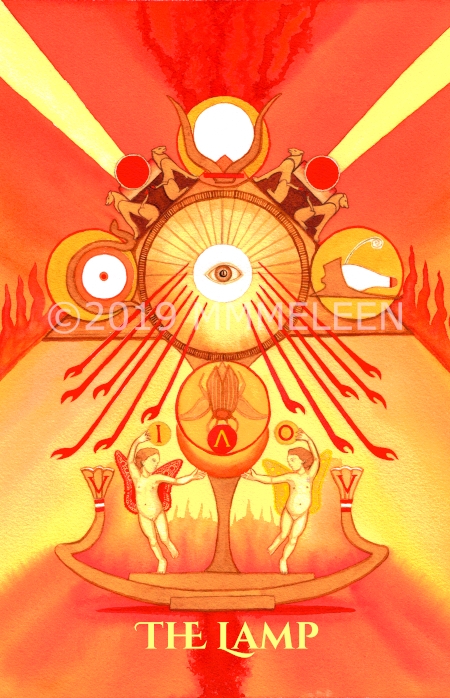
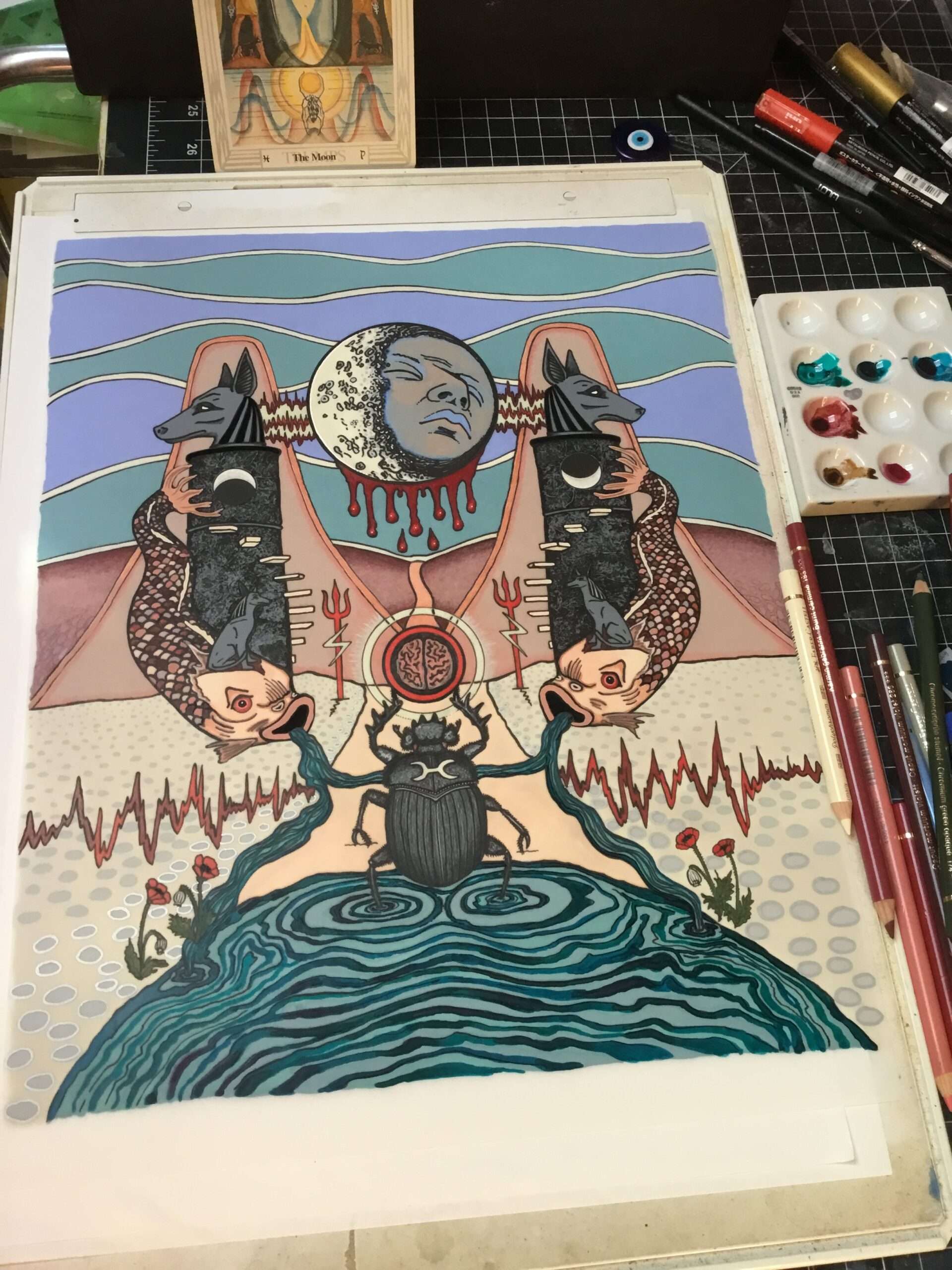
Note the solar disk carried by the scarab. It’s clearly a brain (letter Qoph, meaning “back of head” is perhaps cognate.) Here is a closer look:
excerpt from Scions of 777:
“The solar disk the scarab rolls here is revealed to be the two halves of the brain. One half controls the conscious, logical functions, while the other oversees the creative, imaginative, and intuitive. The deep groove between them, the cerebral fissure, separates them, yet allows for crossover as the left side of the brain controls the right side of the body, and vice-versa. It is another fitting symbol for the duality of the two fishes of Pisces.”
This connective area known as “the cerebral fissure” connecting the right and left halves of the brain, which control the left and right side of the body, also reminds me of the connection in the Telos Eight of Cups image for Pisces I. The figure’s two bodies, joined by the left and right hand.
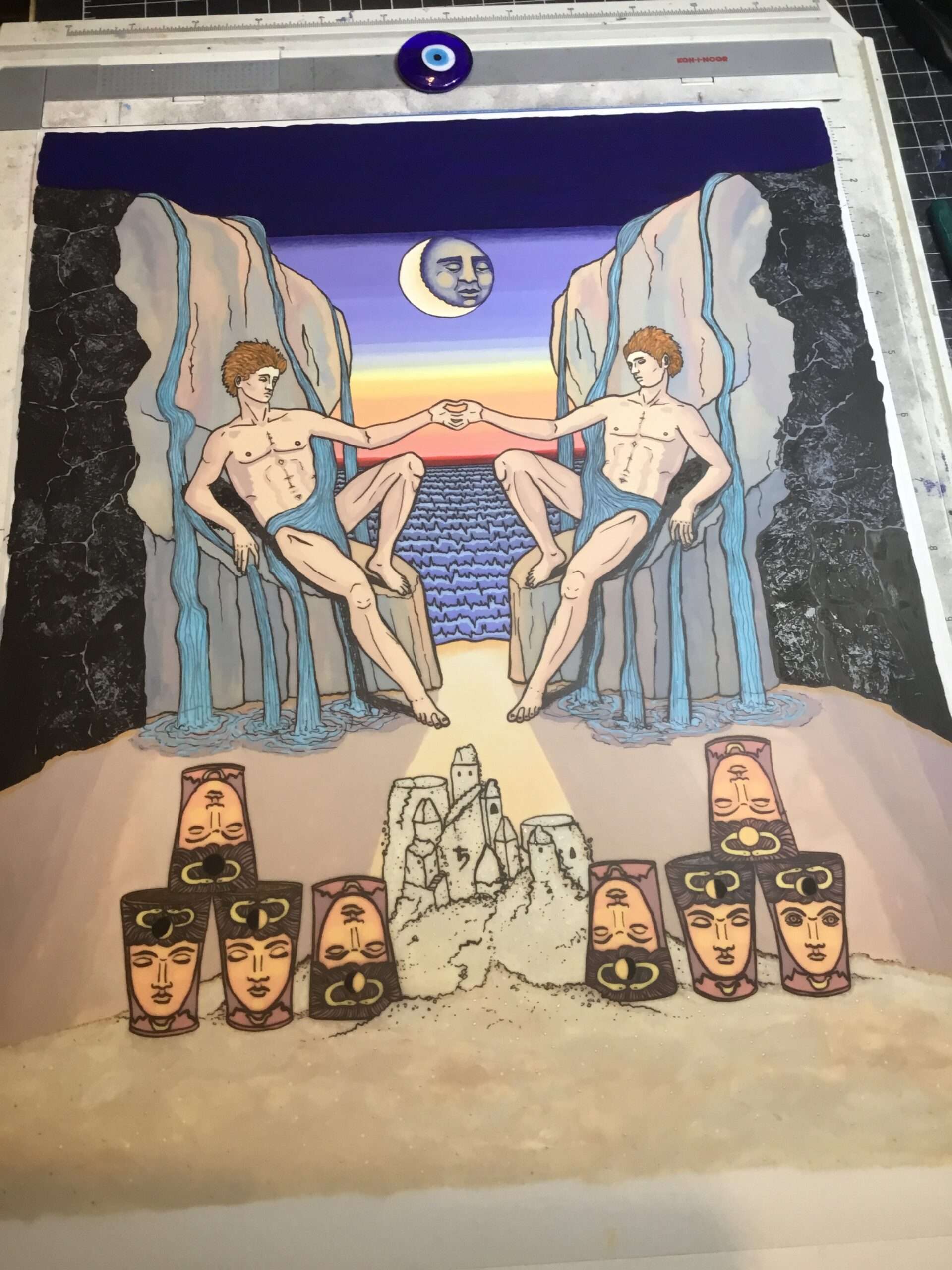
“A man with two bodies, but joining their hand.” Two bodies, one soul?
Telos Tarot of 777 original line art for Pisces 1 decan card
Ascendant Decan of Pisces: A man with two bodies, but joining their hands.
Lord of Indolence (Abandoned Success) – Telos Tarot of 777 Eight of Cups
Decan Walk: Pisces 1
In the tarot Pisces’ first decan corresponds to the Eight of Cups, Indolence or Lord of Abandoned Success.
Pisces is ruled by Jupiter
the Chaldean decan ruler is Saturn
Eights have a Mercury influence through Hod, the eighth sephira.
The description is a strange one: A man with two bodies, but joining their hands. It seems rather Mercurial, like the Gemini twins. The Picatrix version says it “looks as though he is giving a gesture of greeting with his hands.” Agrippa says he is carrying burdens, and Bruno that he is carrying his possessions as he looks for a new dwelling place. But the 777 image description is simple, so I kept it as such.
The Pisces card in tarot is The Moon, which accounts for the lunar imagery in the Telos Tarot of 777 Eight of Cups: the dark side or “earth shine” of the Moon in the sky shows a sleeping face and the waves are like the brain waves of sleep. The figures are between two towering formations, like the Moon card’s towers. The Eight cups in the foreground are gold (Jupiter) and black (Saturn) and show the eight major phases of the Moon. The cups all have their eyes closed – except for one, the last phase of the waning crescent, which is also in the sky. Some of the cups are turned upside down. They have been used to make the ultimate symbol of “Abandoned Success,” a sandcastle whose grains of matter will soon be dissolved by the encroaching sea. Sand itself corresponds to both Pisces, and to decan ruler Saturn, according to astrological rulership.
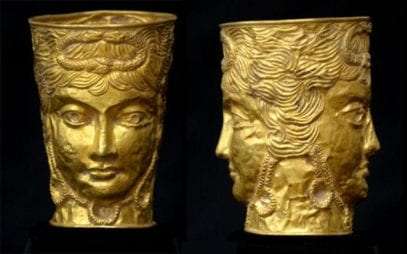
The cups were inspired by this ancient two-faced golden cup, whose story is told inScions of 777. It languished under a bed for years, as the owner thought it was worthless and not a solid gold precious artifact!
Hellenistic god per 36 Airs of the Zodiac:
Okeanos, the primordial Titan who encircled the Earth and was father to the thousands of Potamoi, river gods, and Oceanids, water nymphs. He has some possible connection to the serpent Ophion who was cast into the ocean by Kronos (Saturn, ruler of the decan).
Ptolemaic Egyptian god per 777:
Rephan, is the Greco-Egyptian god listed in 777, and is probably Remphan, the Babylonian name for the star-god Saturn, also known as or Moloch. In the New Testament the martyr Stephen who refers to the worship of idols and the golden calf, also references “the star of your god Rephan.”
The Picatrix talismanic applications mention the use of this face for successful and safe journeys by sea, and for fishing in the sea.
I suggest using this image for exploration of Piscean themes such as: dream work the arts, divination, and psychological insights.
This first decan of Pisces signifies myriad thoughts, journeys, and seeking after substance, yet with a tendency toward stagnation.
Therefore, one might also use this image for renunciation of worldly things, as success abandoned.
Austin Coppock calls this face “The Labyrinth,” and as such it can be something to become lost in, or something traveled to find your center. The “sleep” references in the Telos card are appropriate, for sleep “knits up the raveled sleave of care,/ The death of each day’s life, sore labor’s bath,/ Balm of hurt minds, great nature’s second course,/ Chief nourisher in life’s feast.” (Macbeth)
In sleep we abandon worldly things, and travel the labyrinths of the soul (Pisces) mind (Mercury). But sleep can also be a form of escapism. The Eight of Cups indicates success abandoned due to decline of interest and spiritual self-undoing, when one lacks commitment for things of this world, preferring to enter the liminal space of the dream world. Decan ruler Saturn wants limits andstructure, but Pisces wants to transcend all limits and dissolve structure, like the sea erodes a sandcastle.
Here we are, at the end of the last decan of Aquarius, for the Part II observations. Today there was a new moon, and eclipse at the penultimate Aquarius degree. The Tabula Mundi card for this decan references an eclipse, but a lunar eclipse instead of like today’s new moon eclipse, which is actually a solar eclipse, when the Sun in Aquarius is eclipsed by the Moon in Aquarius. The Moon rules Aquarius decan 3, so is especially relevant here.
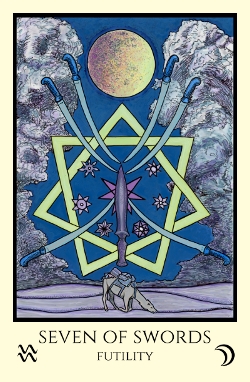
Excerpt from Book M: Liber Mundi, for the Seven of Swords and Aquarius 3 decan:
“From the Priestess card, for the Moon, we see the Moon itself in the background, at the dark and sometimes blood red stage of the totality of a lunar eclipse. In a blood moon eclipse, people sometimes experience negative effects. At the physical level there can be lethargy and at the psychological level, negative thoughts especially about spiritual motifs. The moon’s action of “flux and reflux” leads to vacillation and instability, and people are more prone to make poor decisions as the intellect is compromised.”
While this has been a fairly uneventful decan personally, I have noticed the lunar effects of “flux and reflux,” or the waxing and waning of both the energy of the physical body, and the mental realm (Aquarius). I’m sort of an honorary Aquarian, in that I have it rising natally, plus two important personal planets there. So I definitely do the usual Aquarian thing of detachment very well. I can live in my head and “suppress and deny” the physical. But lately I’ve been tuning into that. And I have definitely noticed the waxing and waning of these energies. Ignore the body for too long and your energy, both physical and mental, will definitely flag. I’m learning to be more strategic about that – strategy is a theme of this card.
But for the record, I see today’s solar eclipse as a positive event – at least as much as an eclipse can be seen as positive. For they aren’t exactly auspicious, especially in Vedic astrology. But eclipses come in pairs, so today’s new moon solar eclipse will be followed by a lunar eclipse at the next full Moon. The time in between these two events is potent and portal-like. One can and should consider today: What do I want to release through this portal? As in, something you want to no longer be with you. I’d suggest releasing what you realize is futile. And at the same time, what instead do I want to enter through this portal in its place? As in, a recomposing or transformation of your state of existence.
The Sabian symbol for this eclipse is about transformation: Aquarius 29, “A butterfly emerging from a chrysalis.”
Today is also the Lunar New Year, which feels like a potent time for an eclipse. We release the year of the Wood Snake, and usher in the year of the Fire Horse. From Earth to Fire, or Yin to Yang, which echoes the transition of both Saturn and Neptune from Pisces into Aries. They meet at the fiery start of the Zodiac, at the Zero Point, or zero degrees of Aries.
But there are still lots of planets in Pisces. The Moon already entered Pisces after the Aquarian eclipse, to join Mercury and Venus. And sometime tomorrow, the Sun is also moving on to the next decan, the first decan of Pisces. We are almost to the end of the decan walk.
Yet it always begins again; after Pisces the Sun continues on into Aries, to a new decan walk.
Aquarius, ruled by Saturn (classical) and Uranus (modern), meets up with the ever-changing Moon, ruler of the decan in the Chaldean system. The Sevens have a correspondence to Venus, through Netzach on the Tree of Life. The triplicity ruler is also Venus, another planet that like the Moon, has phases.
Magical image of the decan per 777: A small-headed man dressed like a woman, and with him an old man.
“This is an instance where the 777’s decan description deviates from the rest somewhat, with the image of “A small-headed man dressed like a woman, and with him an old man.” Various of the descriptions describe the man as angry, envious, or deceitful; the Picatrix has the man with a mutilated head, accompanied by an old woman.
The “small-headed” bit rather reminds me of a quote from Shakespeare’s Hamlet. “I could be bounded in a nutshell, and count myself a king of infinite space, were it not that I have bad dreams. Which dreams, indeed, are ambition; for the very substance of the ambitious is merely the shadow of a dream.” Hamlet’s frustration as he grapples with the human condition, and his vacillation, resonate here.
The idea of being “small-headed” may also reflect the need to think outside the box and use your wits, to overcome a limitation or weakness. Or to outsmart someone who is trying to undermine you. It can represent needing to use your head to get out of a jam, and perhaps not always feeling up to the task or making appropriate effort. He is “dressed like a woman,” for both Venus and the Moon influence the card. The old man is of course for Saturn, ruler of Aquarius.
This small-headed man travels with an old man, under the influence of a waning moon, as six sabers threaten them. The cross-dressing man carries the seventh sword, but is hardly dressed for fighting in his long gown and wrap. The old man probably will not be much help either, bent and leaning on his cane. Yet he may be able to lend wisdom on this journey.
The figures taken alone are also purposefully ambiguous. The small-headed one is behind the old man with a sword. Is he ready to stand with him against the encroaching six dueling swords, or will he double-cross him?
The combination of a man dressed as a woman and an old man also reminds me of Achilles. In some accounts, his mother Thetis dressed him as a girl to hide him and keep him safe from war. But wily Odysseus (perhaps the old man figure) disguised himself as a peddler of women’s clothes and tricked Achilles into revealing himself. These themes of Achilles, by being in disguise, and Odysseus, being crafty and somewhat deceptive, fit with the reputation of the card for sometimes representing conniving. For while the Greeks admired Odysseus’ cunning and cleverness, the Romans considered his deceits as dishonorable.
Aquarius has a body correspondence to the ankles. Achilles is also known for his one spot of vulnerability, where the term “Achilles’ heel” originates. Thetis had dunked him in the Styx when he was an infant, to make him invulnerable to weapons, but had to hold him by the heel (or really, the tendon on the ankle near the heel). So, she missed a spot in the dunking, which was his undoing. This contributes to the idea of some weakness in play: futility or unstable effort.
The changeability of the moon as decan ruler adds instability here, along with the incompatible combination of Venus and Saturn. Aloof and cool Saturn-ruled Aquarius is not exactly the best place for warm Venus or the emotional Moon. In the sky, a seven-pointed figure combines the emblems of a star (Aquarius) and a rose (Venus), and contains a sliver of the moon. It picks up seven points along a ring of 56 “holes”, like the Aubrey holes at the monument of Stonehenge that mark out the lunar cycles, for the changes of the Moon influencing the decan.
Seven-pointed stars are also known as Faery Stars, associated with the notoriously tricky Fae. Where a pentagram is associated with the earthly magic of the elements, the seven-pointed septagram star is more celestial. The pentagram represents the four elements plus spirit, or the four directions plus the above. The seven-pointed star expands that to include the points below and within, places normally hidden from view. One should be careful when dealing with the hidden realms, as they are the “between” places of the Fae, who are known for tricking mortals.” (end of excerpt)
The Seven of Swords and the Aquarius decan 3 are both associated with deceit, betrayal, thievery, envy, and the detection of it, as seen in the Raphael image and significations:
Raphael image and significations
A man having an envious look, holding his hand on his sides. Detection and affronts.
The deity per the “36 Airs of the Zodiac” fragmentary text is Osiris, who was cruelly betrayed and dismembered by his bother Set – and cleverly re-assembled by his sister(s) and sister-spouse, Isis and Nephthys. The only part missing was the phallus, so in a sense, he was like a woman, like the man of the decan description.
The Ptolemaic god is Proteus, the shape-shifting and wily “Old Man of the Sea” – more of an Odysseus figure like the old man in the image.